Videos

These Apartment Deals Look Great… But They’re Investor Traps in 2026
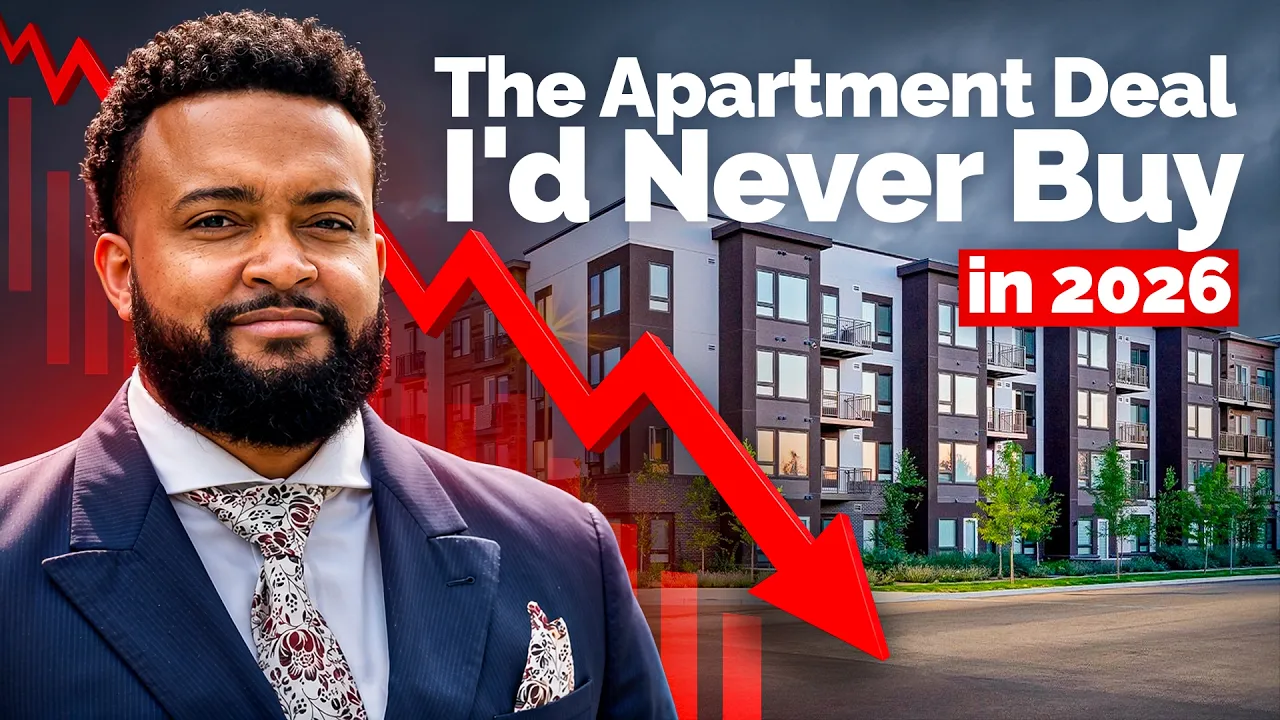
If you are looking to buy multifamily real estate in 2026, you need to understand that the game has completely changed. Buying an apartment complex based on 2021 underwriting assumptions is the fastest way to destroy your equity today.As a commercial real estate broker, I don't just look at the acquisition—I look at the operational reality of ownership through the "3-Lap Framework." In this video, I am pulling back the curtain on the exact multifamily deals and real estate traps I am advising my clients to completely avoid right now. We are breaking down the multifamily math behind skyrocketing operating expenses, the bridge debt maturity wall, and why a "95% occupied" building might actually be a cash-flow nightmare.If you want to protect your capital and learn how to actually survive "Lap 2" (Operations) in today's commercial real estate market, this breakdown is for you.👉 Connect with me if you want a free Equity Snapshot of your multifamily portfolio: https://www.justin-ferguson.com👇 Drop a comment below: What is the biggest operational challenge you are facing with your properties right now?🔔 Subscribe for more insider commercial real estate strategies and multifamily math: https://www.youtube.com/@JustFerg1⏱️ CHAPTERS / TIMESTAMPS:00:00 - The 2026 Real Estate Reality & The "3-Lap Framework"01:04 - Trap #1: The 2021-Priced Deal & Refinance Risks03:14 - Trap #2: Overly Optimistic Value-Add & Fake Rent Growth04:50 - Trap #3: Buying a Strong Metro, but a Vulnerable Submarket06:12 - Trap #4: The Deferred Maintenance & Hidden CapEx Trap07:50 - Trap #5: Economic vs. Physical Occupancy (The Vanity Metric)09:24 - Trap #6: The Property Tax Reassessment Timebomb12:42 - The Defense Strategy: How to Protect Your NOI13:31 - Final Thoughts: Surviving the 2026 Market#MultifamilyRealEstate #CommercialRealEstate #RealEstateInvesting #ApartmentInvesting #RealEstate2026 #RealEstateMarket #JustinFerguson #MultifamilyMath #CapRate

You may also be interested in
How Much Should I Budget for Insurance on an Apartment Building in Richmond, Virginia?

# How Much Should I Budget for Insurance on an Apartment Building in Richmond, Virginia? For a stabilized Richmond multifamily property, insurance typically runs $0.18 to $0.28 per square foot annually depending on your building's class — but that number can swing more than double depending on which submarket you're in. On a 200-unit, 850-square-foot-average property, that's the difference between roughly $30,000 and $48,000 a year in insurance alone. ## Why insurance costs vary so much by class and submarket Richmond's 4 & 5 Star properties average $0.28 per square foot in annual insurance, compared to $0.21 for 3-Star and $0.18 for 1 & 2-Star assets. That gap tracks with replacement cost and amenity exposure — newer, higher-end buildings cost more to rebuild and often carry more liability exposure from pools, fitness centers, and covered parking. ## Where the real spread shows up: location Submarket matters as much as class. Among 4 & 5 Star properties, Northside runs $0.38 per square foot and Hopewell County $0.29, while Chesterfield County runs just $0.15 — less than half. Among 3-Star properties, Petersburg/Colonial Heights and Prince George County both run $0.25, while Chesterfield County again sits at the low end around $0.16. If you're budgeting off a citywide average instead of your specific submarket, you could be off by 50% or more in either direction. ## What this means for your NOI Insurance is baked into total operating expenses, and Richmond's 4 & 5 Star total operating costs (including management, payroll, utilities, maintenance, taxes, and insurance) run around $8.77 per square foot annually — with Northside topping out at $10.32 and Chesterfield County running as low as $5.94. That's not a rounding error; on a 100,000-square-foot property, it's a swing of over $400,000 a year in total operating costs, which flows straight through to your NOI and, ultimately, your valuation at sale. ## What to actually do with this Before you assume a market-average insurance number in your underwriting or your listing pro forma, pull your actual policy renewal and compare it against the submarket-specific figures above — not the citywide average. Buyers underwriting your deal will do the same comparison, and if your insurance line item looks out of step with your specific submarket, it's one of the first things they'll flag in diligence. ## The takeaway Insurance costs in Richmond aren't a single number — they're a function of your building's class and your specific submarket, and the spread between the cheapest and most expensive corners of the market is wide enough to move your valuation by six figures. ## What to bring me If you want a clear read on whether your insurance line item is in line with comparable properties in your submarket, send me your current policy declarations page and your operating statement. I'll tell you where you actually stand. #RichmondMultifamily #VirginiaCommercialRealEstate #ApartmentInvesting

Free Downloads
Fill out the form below and get immediate access to valuable resources!
Thank you for your interest!

Please copy the password below and follow the link.

View Resources
Oops! Something went wrong while submitting the form.